Computer Science and Design
Table of Contents
- Introduction: The Powerful Intersection of Code and Creativity
- What is Computer Science and Design?
- Why Combine Computer Science with Design?
- Academic Pathways: B.Tech, B.Sc, and Beyond
- Inside the Syllabus: What You’ll Study
- Key Concepts at the Intersection
- Career Opportunities and Industry Demand
- Top Universities and Programs Worldwide
- Frequently Asked Questions (FAQs)
- Conclusion: Shaping the Future with Computer Science and Design
Introduction: The Powerful Intersection of Code and Creativity
What is Computer Science and Design?
Computer science and design is an interdisciplinary field that integrates the analytical rigor of computer science with the human-centered principles of design. It goes beyond traditional programming to focus on how digital products are conceived, built, and experienced by users.
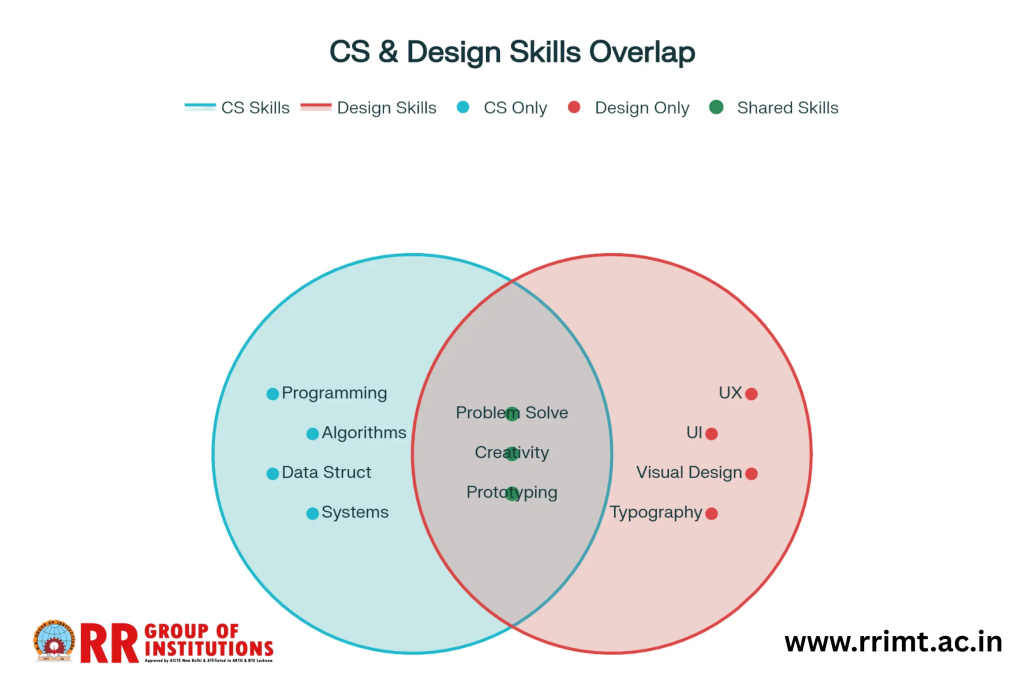
Unlike conventional computer science programs that emphasize algorithms, data structures, and system architecture, computer science design curricula incorporate visual communication, interaction design, prototyping, and user research. Similarly, it elevates design education by grounding it in technical feasibility—teaching designers how software works so they can create more functional, scalable, and innovative solutions.
This synergy is evident in domains such as:
- Computer science and graphic design: Creating visually compelling digital assets with code (e.g., generative art, data visualization).
- Computer science and game design: Building interactive narratives and mechanics using game engines like Unity or Unreal.
- Computer science and web design: Developing responsive, accessible, and aesthetically pleasing websites.
- Computer science UX design: Crafting seamless user journeys through research, wireframing, and usability testing.
At its core, computer science with design is about solving human problems with technology—thoughtfully, ethically, and beautifully.
Why Combine Computer Science with Design?
The marriage of computer science and design isn’t just trendy—it’s essential. Here’s why:
1. User-Centric Innovation
Technology that ignores human needs fails. By embedding design thinking in computer science, developers learn to empathize with users, define real problems, ideate solutions, prototype rapidly, and test iteratively—leading to products people actually want to use.
2. Competitive Advantage in the Job Market
Employers increasingly seek “T-shaped” professionals: deep technical skills (the vertical bar of the T) paired with broad collaborative and creative abilities (the horizontal bar). A graduate of a computer science and design engineering course stands out in fields like product management, front-end development, and UX research.
3. Bridging the Communication Gap
Traditionally, developers and designers worked in silos, leading to misaligned expectations and costly rework. Professionals fluent in both languages can translate technical constraints into design opportunities—and vice versa.
4. Driving Digital Transformation
From healthcare apps to smart city interfaces, the future of digital services depends on seamless integration of form and function. Computer science and designing equips students to lead this transformation.
Academic Pathways: B.Tech, B.Sc, and Beyond
For students seeking formal education in this hybrid field, several degree options exist globally. The most prominent include B.Tech, B.E., and B.Sc programs.
B.Tech in Computer Science and Design
The BTech in Computer Science and Design (often abbreviated as BTech CSD) is a 4-year undergraduate engineering degree offered by institutions like Symbiosis Institute of Technology (SIT), VIT, and select IITs. It blends core computer science subjects with design studios, human-computer interaction (HCI), and creative computing.
Key Features:
- Accredited as an engineering program (AICTE/UGC recognized in India).
- Includes labs for digital logic design for computer science students, UI/UX prototyping, and game development.
- Capstone projects often involve building real-world applications with design validation.
B.Sc Computer Science and Design
A B.Sc in Computer Science and Design is typically a 3-year program (in many countries) with a stronger emphasis on theoretical foundations and creative practice. It’s ideal for students who prefer a balance between coding and visual arts without the heavy engineering load.
Common subjects include:
- Programming (Python, JavaScript)
- Graphic design principles
- Web technologies
- Data structures and algorithms
- Computer science front page design (HTML/CSS/React)
Specialized Tracks: Game Design, UX/UI, and Web Design
Many universities allow students to specialize:
- Computer science and video game design: Focus on engines, AI for NPCs, level design.
- Computer science UX design: Emphasizes user research, information architecture, and usability metrics.
- Computer science and web design: Covers responsive frameworks, accessibility standards (WCAG), and performance optimization.
These tracks align with industry needs—LinkedIn’s 2023 Emerging Jobs Report listed UX Designer and Front-End Developer among the top 10 fastest-growing roles.
Inside the Syllabus: What You’ll Study
Understanding the computer science and design syllabus is crucial for prospective students. While curricula vary by institution, most programs share a common structure.
Core Computer Science Subjects
These form the technical backbone:
- Programming Fundamentals (C++, Java, Python)
- Data Structures and Algorithms
- Database Management Systems
- Operating Systems
- Computer Networks
- Digital Logic Design in Computer Science: Covers Boolean algebra, logic gates, and circuit design—essential for hardware-aware software development.
Essential Design Modules
These cultivate creative and user-centered skills:
- Visual Design Principles (color theory, typography, composition)
- Interaction Design
- User Interface (UI) Design
- Prototyping Tools (Figma, Adobe XD, Sketch)
- Motion Graphics and Animation
Interdisciplinary Courses
The magic happens in the overlap:
- Design Thinking Computer Science: Workshops on empathy mapping, journey mapping, and rapid ideation.
- System Analysis and Design in Computer Science: Teaches how to model software requirements using UML, ER diagrams, and use cases.
- Research Design in Computer Science: Methods for conducting A/B tests, surveys, and heuristic evaluations.
- Computer Science and Web Design: Full-stack development with a focus on aesthetics and usability.
A typical computer science and design engineering syllabus might look like this:
| Year | Semester | Key Subjects |
|---|---|---|
| 1 | 1 & 2 | Programming, Calculus, Design Fundamentals, Digital Logic |
| 2 | 3 & 4 | Data Structures, Web Design, UX Principles, OOPs |
| 3 | 5 & 6 | Algorithms, Game Design, HCI, Cloud Computing |
| 4 | 7 & 8 | Capstone Project, AI/ML for Design, Portfolio Development |
For detailed syllabi, refer to official university websites like SIT Pune or VIT Vellore.
Key Concepts at the Intersection
Let’s dive deeper into the foundational ideas that define computer science and design.
Design Thinking in Computer Science
Design thinking computer science is a human-centered problem-solving approach. It involves five stages:
- Empathize: Understand user needs through interviews and observation.
- Define: Frame the problem clearly.
- Ideate: Brainstorm diverse solutions.
- Prototype: Build low-fidelity mockups (e.g., paper sketches or Figma wireframes).
- Test: Gather feedback and iterate.
This methodology is now standard in tech giants like Google and Apple—and is increasingly taught in computer science design engineering programs.
User Experience (UX) and User Interface (UI) Design
UX in computer science focuses on the overall feel of interacting with a product, while UI deals with visual elements. Together, they ensure that software is not just functional but delightful.
Key topics include:
- Information architecture
- Usability heuristics (Jakob Nielsen’s 10 principles)
- Accessibility standards
- Computer science user interface design best practices (e.g., consistent navigation, feedback mechanisms)
System Analysis and Design
System analysis and design in computer science teaches how to translate business requirements into technical specifications. Students learn to:
- Create use case diagrams
- Model data with ER diagrams
- Design modular, maintainable systems
This is critical for roles like software analyst or product owner.
Prototyping and Digital Logic Design
Prototyping computer science involves creating interactive models of software before full development. Tools range from paper prototypes to high-fidelity InVision demos.
Meanwhile, digital logic design in computer science ensures students understand how hardware executes code—vital for embedded systems, IoT, and performance optimization.
Career Opportunities and Industry Demand
Graduates of computer science and design courses enjoy diverse career paths:
| Role | Key Skills | Average Salary (Global) |
|---|---|---|
| UX/UI Designer | Figma, user research, wireframing | $85,000 |
| Front-End Developer | HTML/CSS, React, responsive design | $90,000 |
| Game Developer | Unity, C#, 3D modeling | $75,000 |
| Product Designer | Design thinking, prototyping, analytics | $110,000 |
| Web Designer | WordPress, SEO, accessibility | $65,000 |
Industries hiring heavily include:
- Tech (Google, Meta, Adobe)
- Gaming (EA, Ubisoft, Nintendo)
- E-commerce (Amazon, Shopify)
- Healthcare IT (Teladoc, Epic Systems)
With the rise of AI-powered design tools (like Galileo AI and Uizard), professionals who understand both code and creativity are more valuable than ever.
Top Universities and Programs Worldwide
Looking for the best computer science and design engineering course? Consider these institutions:
- Symbiosis Institute of Technology (SIT), India
Offers B.Tech in Computer Science and Game Design with industry tie-ups. - Carnegie Mellon University, USA
Renowned for its Human-Computer Interaction (HCI) program. - Royal College of Art & Imperial College London, UK
Joint Innovation Design Engineering master’s program. - Delft University of Technology, Netherlands
Strong focus on design and computer science integration. - University of Washington, USA
Top-ranked Bachelor of Design in Interaction Design with CS electives.
Always verify accreditation and review the syllabus of computer science and design before applying.
Frequently Asked Questions (FAQs)
Q: Is B.Tech in Computer Science and Design the same as regular Computer Science?
A: No. While it includes core CS subjects, it adds significant design coursework—making it ideal for creative coders.
Q: Can I pursue graphic design after a computer science degree?
A: Absolutely! Many computer science with graphic design professionals work in motion graphics, data viz, or branding.
Q: What’s the difference between UX and UI in computer science?
A: UX is about the user journey; UI is about visual elements. Both are covered in computer science UX design courses.
Q: Do I need to be good at drawing to study computer science and design?
A: Not necessarily. Digital tools handle much of the execution—conceptual thinking matters more.
Q: Are there online courses for computer science and design?
A: Yes! Platforms like Coursera (Google UX Design Professional Certificate) and edX offer excellent options.
Conclusion: Shaping the Future with Computer Science and Design
The fusion of computer science and design is more than an academic trend—it’s a paradigm shift in how we build technology. As AI, AR/VR, and the metaverse evolve, the demand for professionals who can code and create will only grow.
Whether you’re enrolling in a B.Tech computer science and design program, exploring computer science and game design degree options, or self-studying design thinking in computer science, you’re positioning yourself at the forefront of innovation.
Remember: the best technology doesn’t just work—it resonates. And that’s the power of computer science & design.