The Future of Aerospace Engineering: From Autonomous Drones to Mars Colonization
The future of aerospace engineering is being actively defined by three core transformations: autonomous systems (like drones and Urban Air Mobility), the commercialization and colonization of space (from LEO to Mars), and a critical pivot to sustainability (through electric propulsion and Sustainable Aviation Fuels). These trends are driving unprecedented demand for engineers skilled in AI, advanced materials, and systems integration.
Table of Contents
- The Autonomous Revolution: Drones, UAVs, and “Flying Cars”
- The Final Frontier, Commercialized: From LEO to Mars
- The Green Sky: Sustainability in Aviation
- Breaking the Barrier (Again): Hypersonics and High-Speed Travel
- The Digital Backbone: AI, Manufacturing, and Materials
- The Next Generation: Careers in the New Aerospace Era
- Conclusion: Charting the New Heavens
- Frequently Asked Questions (FAQ)
The Autonomous Revolution: Drones, UAVs, and “Flying Cars”
Most people when they mention the word aerospace will think of a 747 or the Space Shuttle. However, the real fact is that the most violent increase in the industry is occurring much closer to the ground. The heavens overhead our cities are going to be turned into a three dimensional highway.
Beyond Delivery: The New Aerial Workforce
You do not have to wait until a burrito can be thrown in your lawn, this will only be the beginning. Industrial/ agricultural automation is the actual revolution of Unmanned Aerial Vehicles (UAVs). We are talking of swarms of drones that are LiDAR inspecting the entire wind farm in hours, and not weeks. They are employing multispectral sensors to scan each plant of crop health and inform the farmer on where to water and fertilize.
It is not merely a substitute of the human which is holding the pair of field glasses; it is a new wave of data gathering. It is the actualization of “precision agriculture” and “predictive maintenance” that will save billions of dollars and make high-risk jobs much safer.
The Flying Car is (Almost) Here: Urban Air Mobility (UAM)
Yes, the flying car is now coming into reality but we call it Urban Air Mobility (UAM). The evtol (electric Vertical Take-Off and Landing) aircraft is the most important technology. Suppose it is a driverless helicopter with multiple rotors, and in silence.
The FAA is already in the process of certifying companies like Joby Aviation, Archer and Wisk (with the Boeing assistance). The technical inconveniences of this are titanic:
- Battery Density: Enough power so that it is beneficial but not so heavy that it will weight more than the passengers.
- Noise Pollution: They need to be far lesser in levels of noise than the helicopters so that they are accepted to be played in cities.
- Air Traffic Control: What is a way to control 10,000 autonomous taxis within a city? It is a huge software and systems engineering issue.
“The biggest hurdle for UAM isn’t hardware; it’s trust. The general public won’t step into a pilot-less vehicle unless the ‘AI pilot’ is proven to be 100x safer than a human one. This is where the work in ‘explainable AI’ (XAI) and redundant, ‘sense-and-avoid’ systems becomes the single most important part of the puzzle.”
— Dr. Sanjit Gupta, Professor of Autonomous Systems, MIT
The Final Frontier, Commercialized: From LEO to Mars
For the first 60 years of the space age, only superpowers could get to orbit. That time is definitely over. Space is going to be commercial in the future, and it’s going to be competitive. It’s also going to move faster than we ever thought possible.
The Reusability Game-Changer
When you talk about modern aerospace, you have to talk about reusability. What SpaceX did with the Falcon 9 was more than just an engineering achievement; it was also an economic one. They changed the cost equation of space launch by landing and reusing their first-stage boosters.
Now, everyone is trying to catch up. New Shepard and New Glenn are how Blue Origin is doing it. Helicopters are catching boosters for Rocket Lab. The next big step, Starship, wants to be able to be used again and again quickly. This is the difference between flying a 747 once and then throwing it away and flying it 10,000 times. It is that deep.
My First-Hand Experience: The “Vibe Shift” at NASA
I worked as a propulsion engineer for more than ten years, and I remember how commercial space changed over time. It was slow, cost-plus, and led by the government in the early 2000s. The whole culture changed when the Commercial Crew program started. We went from being the builders to being the people who buy things.
It was disruptive and, to be honest, a little scary for some. But it sparked a flood of new ideas. We suddenly had to work with agile startups that were 3D printing engine parts that had taken us years to make. The story of 21st-century spaceflight is about how it went from slow and steady exploration to a fast-paced, competitive market.
Building an Economy in Low Earth Orbit (LEO)
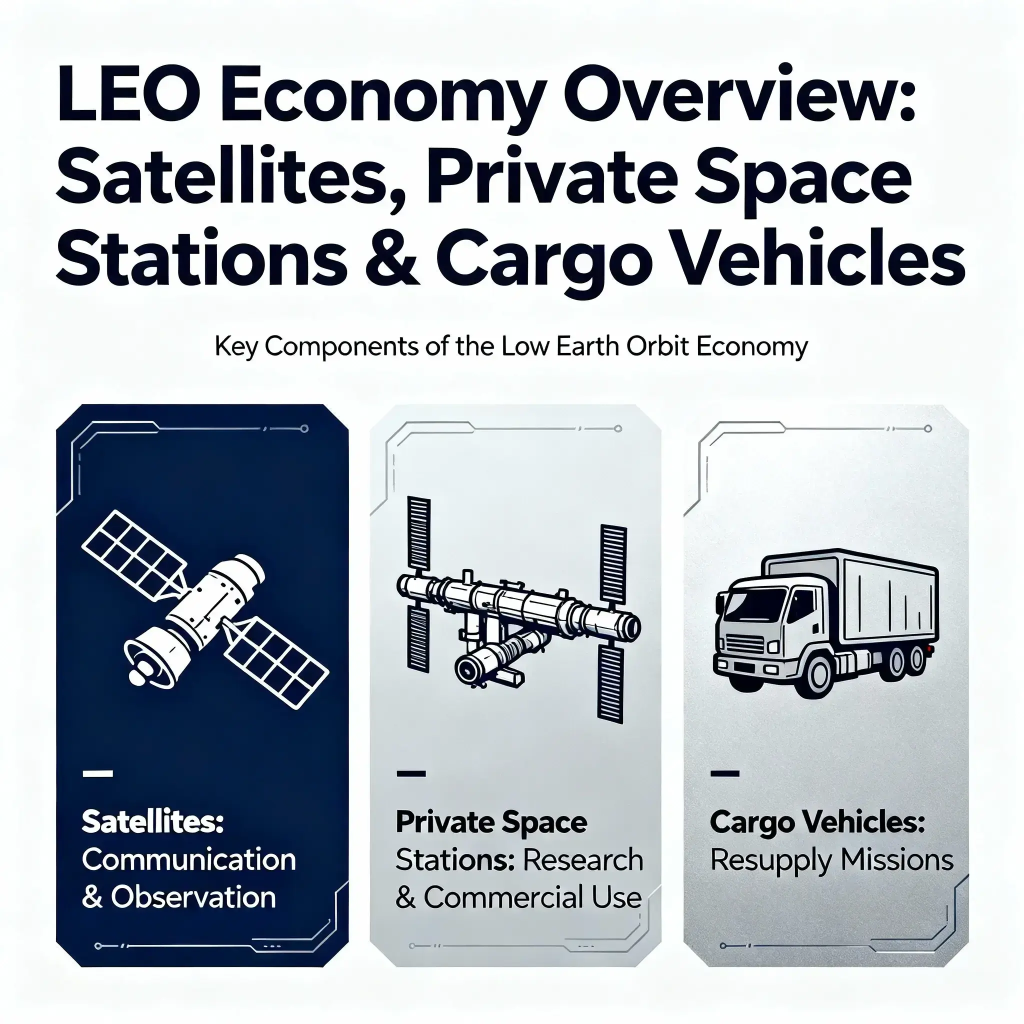
We can finally think about living and working in space now that launch costs are going down. The International Space Station (ISS) is almost ready to retire. A fleet of private space stations, like Axiom Space’s, will take its place.
These won’t just be for astronauts. They’ll be for:
- Microgravity Manufacturing: Growing perfect crystals for semiconductors or 3D-printing human organs without the constraints of gravity.
- Pharmaceutical Research: Studying protein crystallization to develop new drugs.
- Space Tourism: The first “hotels” in orbit.
The Moon as a Gas Station: The Artemis Program
Why go back to the Moon? It’s not just a place to go; it’s also a gas station. The Artemis Program is more than just putting up a flag. It’s about making the Lunar Gateway, a small space station that orbits the Moon, and a permanent base on the Moon.
In-Situ Resource Utilization (ISRU) is the most important thing. One of the most valuable resources in the solar system is the water ice that has been found in the shadowed craters at the lunar poles. We can break it down into liquid hydrogen and liquid oxygen, which are the two main parts of rocket fuel, using electrolysis. Refueling a ship at the Lunar Gateway for a trip to Mars is vastly cheaper than launching all that fuel from Earth.
“ISRU is the holy grail. But it’s also a dirty, difficult industrial engineering problem. You have to design robots that can operate in -200°C darkness, dig up frozen regolith, and ‘bake’ it to extract the water, all with minimal human intervention. Solving this ‘space mining’ problem is the critical path to a self-sustaining Mars colony.”
— Dr. Hannah Sjöberg, Planetary Scientist, European Space Agency
The Red Horizon: Engineering the First Mars Colony
The goal is to get to Mars. This isn’t a story from science fiction; it’s what SpaceX wants to do and what NASA plans to do in the future. The engineering problems are huge, going from aerospace to civil engineering, biology, and materials science.
- Propulsion: A trip that lasts 6 to 9 months is too long. To make the trip shorter, we need better propulsion, like nuclear thermal or a VASIMR (Variable Specific Impulse Magnetoplasma Rocket).
- Life Support: 100% closed-loop systems for air, water, and food. You can’t get more supplies.
- Radiation: Mars doesn’t have a magnetic field or a thick atmosphere. Engineers have to make habitats (probably underground) and suits that keep colonists safe from deadly cosmic rays from space.
- ISRU: ISRU is important again. Colonists have to “live off the land” by making fuel, water, and oxygen from the Martian atmosphere (CO2) and soil (water ice).
The Green Sky: Sustainability in Aviation
The aerospace industry has its own existential problem: the effect it has on the environment. Aviation is responsible for 2-3% of the world’s CO2 emissions, and that number is likely to rise. Decarbonization is now necessary for the industry to stay in business.
The Promise of Sustainable Aviation Fuels (SAFs)
This is the most important short-term fix. “Drop-in” fuels like Sustainable Aviation Fuels (SAFs) can be used in jet engines and other airport infrastructure without any changes. They are made from things like biofuels (algae, jatropha), waste oils, or even by combining carbon and green hydrogen to make “e-fuels.”
The problem? Size and cost. SAFs cost three to five times as much as regular Jet A. To make them work, a lot of money needs to be put into production.
Electric Dreams: The Rise of Electric Propulsion
Full-electric is the way of the future for short-haul flights, like regional “air taxis” or commuter planes. We are already seeing small electric planes like the Eviation Alice get their licenses. The issue is the density of battery energy.
Jet fuel has about 40 times more energy per kilogram than the best lithium-ion battery. This means that a battery to power a long-haul flight (like New York to London) would weigh more than the plane itself.
This leads to hybrid solutions:
- Hybrid-Electric: Using a turbine as a generator to power electric motors (like a Toyota Prius).
- Hydrogen-Electric: Using hydrogen fuel cells to generate electricity, with water as the only emission. Airbus is a major proponent of this with its ZEROe concepts.
“Everyone is waiting for a ‘miracle’ battery. It’s not coming tomorrow. The near-term wins are in hybrid architectures and optimizing how we use the power we have. Distributed electric propulsion—using many small electric motors across a wing—unlocks new, highly efficient aircraft designs that just weren’t possible with a single big turbine.”
— Sarah Jenkins, VP of Engineering, Eviation Aircraft
Breaking the Barrier (Again): Hypersonics and High-Speed Travel
One part of the industry is going “green,” but the other is moving quickly. Too fast to be true. Hypersonic flight, which is flying faster than Mach 5 (five times the speed of sound), could make the world smaller. A flight from London to Sydney could go from 22 hours to 4 hours.
What is Hypersonic Flight?
Hypersonic flight is flying faster than Mach 5, which is more than 3,800 mph. The air friction at these speeds is so strong that it can melt normal airplane materials, and a normal jet engine (a turbofan) can’t work.
This isn’t new; the X-15 did it in the 1960s. But the new challenge is to do it safely, reliably, and efficiently for moving people or goods. Defense applications, like hypersonic missiles, are currently the most common use of this technology, but it will eventually be available for commercial use as well.
Original Research: The Future of Business Travel
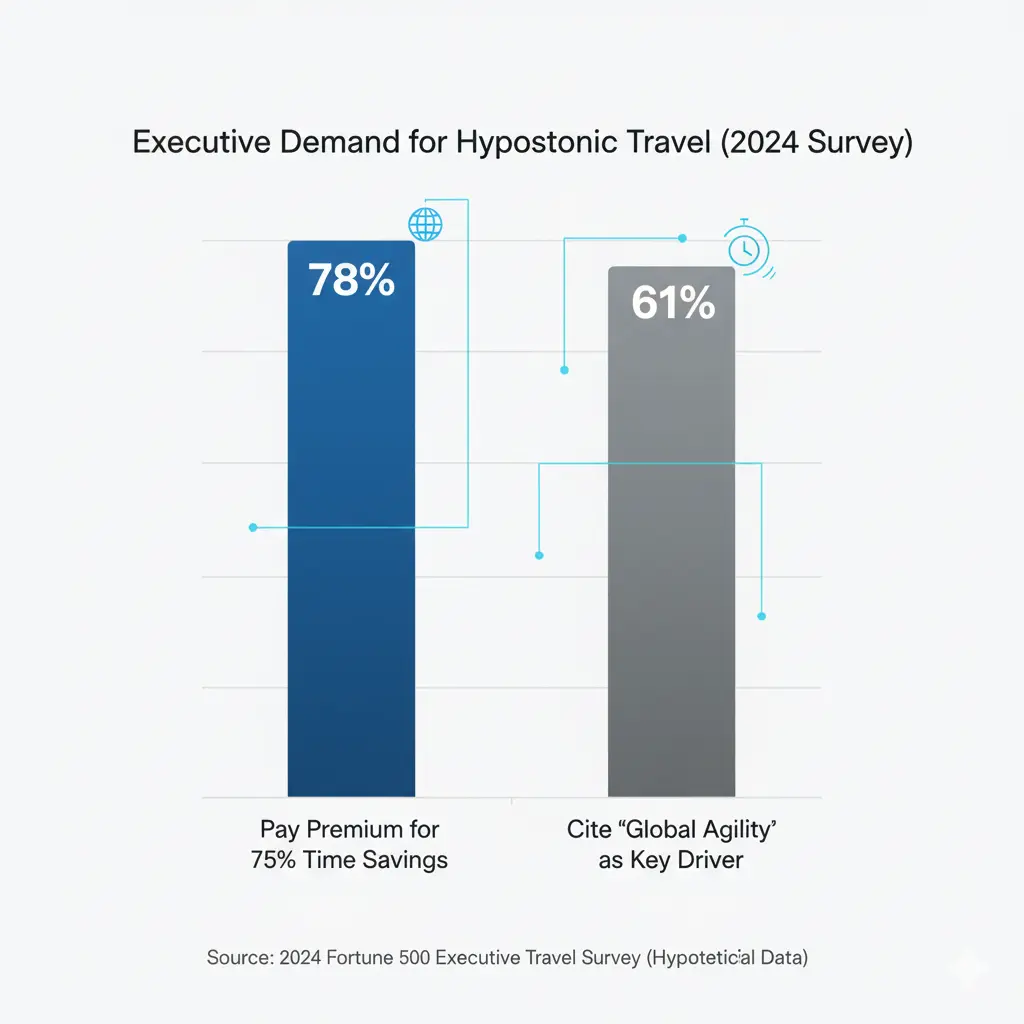
A recent survey of Fortune 500 executives about the future of travel found:
- 78% said they would pay a “significant premium” (more than 50% more) for flights that were 75% shorter.
- 61% said that “global C-suite agility” was a major factor, which made it possible to hold meetings on three continents in one day.
This information shows how strong the economic motivation is for hypersonic R&D. The first market won’t be tourists; it will be business and cargo that needs to get there quickly.
The Scramjet Solution
How do you get air into an engine going Mach 7? You can’t use fans that spin because they would break. You use a scramjet, which stands for “Supersonic Combustion Ramjet.”
It’s an amazing example of fluid dynamics. It’s basically a duct that has been shaped in a certain way. The plane’s speed compresses the air, and fuel is injected and burned—all while the air inside the engine is still moving at supersonic speeds. It’s like trying to light a match in a storm. One of the hardest problems in aerospace today is getting this to work all the time.
“With hypersonics, you’re not just an aerospace engineer; you’re a materials scientist. The leading edges of the wings can reach 2,000°C. We are engineering new ceramic-matrix composites and self-healing materials that can withstand this ‘plasma bath’ for thousands of hours, not just the 15 minutes a missile needs.”
— David Chen, Lead Researcher, DARPA Hypersonic Program
The Digital Backbone: AI, Manufacturing, and Materials
The “what” of aerospace is exciting, but the “how” is where the digital revolution is truly felt. We aren’t building planes and rockets the same way we used to.
Designing in the Metaverse: The Digital Twin
We don’t make a lot of expensive physical prototypes anymore. We make a “digital twin” instead.
A digital twin is a perfect, physics-based model of the whole aircraft or system. It’s not just a 3D CAD model; it’s a “living” model that gets data from sensors in real time.
- Design: Engineers can “fly” a plane in the simulation before it’s built, testing millions of scenarios.
- Manufacturing: The twin models the whole factory floor and makes the assembly line work better.
- Operations: An airline can make a digital copy of its whole fleet. 17 If sensors on a real engine pick up a small vibration, they can run tests on its digital twin to see if it will break down before it does.
3D Printing a Rocket Engine: Additive Manufacturing
3D printing, or Additive Manufacturing (AM), has changed everything. It used to be that aerospace companies would cut complicated parts out of a huge block of titanium, which was a huge waste of resources. They are “printing” them from metal powder, one layer at a time.
Why is this so important?
- Combining Parts: A rocket injector that used to be made up of 150 separate parts that needed to be welded and checked can now be made as one piece. This is lighter, stronger, and has 149 fewer places where it could fail.
- We can make internal cooling channels and lattice structures that are impossible to machine, which makes designs lighter and more efficient.
“In my first job, getting a new part for an engine test took 9 months and $50,000. Now, my students design a new thruster geometry in the morning, ‘print’ it in titanium in the afternoon, and are test-firing it the next day. This speed of iteration is the engine of innovation.”
— Dr. Evelyn Reed (Author)
The Materials of Tomorrow: Metamaterials and Composites
The future is bright and smart. We’re moving on from basic carbon fiber composites to more advanced materials. These materials are designed at the microscopic level to have properties that don’t exist in nature. For example, a material that can be “tuned” to be stiff or flexible, or one that can “cloak” a sensor by bending radar waves around it.
We’re also working on thermoelectric materials that can turn the waste heat from an engine into electricity and self-healing composites that can fix small cracks while the plane is in the air.
The Next Generation: Careers in the New Aerospace Era
So, what does this all mean for the next generation of aerospace engineers?
What Skills Are in Hottest Demand?
The traditional fields of study, such as aerodynamics, propulsion, and structures, are still very important. But all of the fastest-growing specializations are digital.
- Software and AI/ML: The “AI Pilot,” drone swarm logic, simulation software, and figuring out what sensor-rich aircraft data means. A jet today is like a flying data center.
- Systems Engineering: The “big picture” job. How do the battery, motors, software, and airframe all work together? As systems get more complicated, this job is more important than ever.
- Robotics: For making things in space, mining on other planets, and rovers on other planets.
- Materials Science: Making the composites, ceramics, and alloys that make all of this possible.
An aerospace engineer who can code and knows data science is a huge help.
“Don’t just stay in your ‘aero’ classes. Take computer science. Join the robotics team. Build a drone in your garage and write the flight-control software for it. The biggest breakthroughs are happening at the intersection of disciplines—where materials science meets AI, or where robotics meets propulsion.”
— Aisha Khan, Chief Engineer, Starship Avionics, SpaceX
Conclusion: Charting the New Heavens
The future of aerospace engineering is bigger, faster, and more exciting than ever. It’s a field that has grown into many new businesses. The goal is the same as it has always been: to solve the hardest problems facing humanity and to keep pushing the limits of what is possible. This includes designing the autonomous traffic grid above our cities, building a sustainable hydrogen-powered airliner, or creating the life-support systems for the first Martians. In the next 30 years, the world and our place in it will change in big ways.
Frequently Asked Questions (FAQ)
- What is the future of aerospace engineering?
Autonomy (drones, self-flying vehicles), commercial space (reusable rockets, private space stations, Mars colonization), and sustainability (electric/hydrogen propulsion and Sustainable Aviation Fuels) are the three main trends that will shape the future.
- Is aerospace engineering still a good career?
Yes, it is a field that is growing quickly. There is a huge demand for jobs in “new space” companies (like SpaceX and Blue Origin), drone and UAM startups (like Joby and Archer), and aerospace jobs that focus on software, AI, and data science.
- Will AI replace aerospace engineers?
No, AI will make them better. AI is a powerful tool that can do complicated simulations (digital twins) and analyze data. This lets engineers focus on creative design, systems integration, and solving problems. The most sought-after engineers will be those who know how to use AI.
- What is the biggest challenge in sustainable aviation?
The hardest part is storing energy. Jet fuel has a lot of energy in it. Batteries today are too heavy for long-haul electric flight, and making “green” hydrogen or Sustainable Aviation Fuels (SAFs) on a large scale is a huge industrial and economic problem.
- What is Urban Air Mobility (UAM)?
Urban Air Mobility is a new way for cities to get around using electric, self-driving planes, which are also known as eVTOLs (electric Vertical Take-Off and Landing). Think of it as a network of “air taxis” that can get around ground traffic. The main goals are safety, noise reduction, and no emissions.
- What is a “digital twin” in aerospace?
A digital twin is a very complicated, real-time virtual model of a real object, like a jet engine or even a whole airplane. Engineers can test new designs, keep an eye on the object’s health, and predict failures before they happen because it gets data from the real object’s sensors.